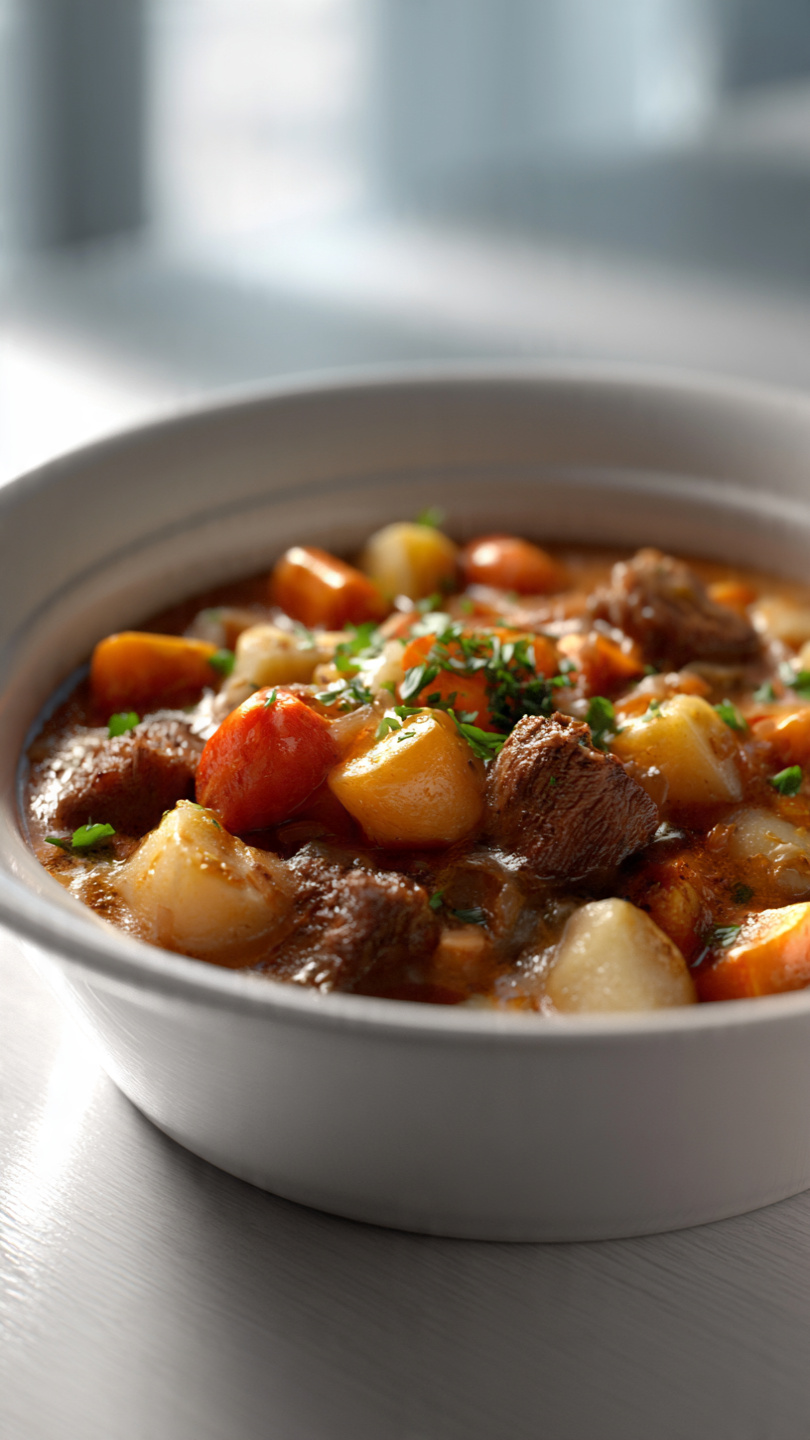
Old Fashioned Beef Stew
This Old Fashioned Beef Stew recipe is the ultimate comfort food, featuring tender chunks of beef, hearty vegetables, and a rich, savory broth that tastes like it simmered all day on grandma's stove.

The Best Old Fashioned Beef Stew You Will Ever Make
There are certain recipes that do not just feed you, they restore you. This Old Fashioned Beef Stew is exactly that kind of dish. A low, slow simmer fills your kitchen with an aroma so warm and savory that people will find their way to the table before you even call them. Tender chunks of beef, creamy potatoes, sweet carrots, and a broth so rich it coats the back of a spoon. This is the Classic Beef Stew Recipe your grandmother made, refined just enough to make it absolutely foolproof.
Whether you are cooking it for a Sunday family dinner, meal prepping for the week ahead, or just chasing that deep sense of comfort that only a proper bowl of stew can deliver, this recipe has you covered from start to finish.
Why This Recipe Works
A lot of beef stew recipes come out thin, bland, or with tough, chewy meat. This one sidesteps every one of those pitfalls. Here is why it stands apart:
- Dredging the beef in flour before searing helps build a gorgeous crust and naturally thickens the broth as it cooks.
- Searing in batches means every piece of beef gets real caramelization instead of steaming in the pot.
- Tomato paste cooked into the aromatics adds a savory depth that you can taste but cannot quite identify, and that is exactly the point.
- Adding vegetables halfway through ensures they become tender without dissolving into mush.
- Low, slow simmering breaks down the tough connective tissue in chuck roast, turning it into something almost silky.
This is How To Make Old Fashioned Beef Stew the right way, not the rushed way.
Choosing the Right Cut of Beef
Do not let anyone convince you to use beef stew meat from a generic pre-cut package. Chuck roast is the gold standard here. It is well-marbled with fat and collagen, which is exactly what you need for a long braise. As it cooks, that collagen melts into the broth and gives it that luxurious, velvety body.
Buy a whole chuck roast and cut it yourself into generous 1.5-inch cubes. You will get more even pieces, and you can control the fat distribution better than with pre-cut options.
Chef's Tip: Pat your beef cubes completely dry before dredging in flour. Moisture is the enemy of a good sear. Dry meat browns. Wet meat steams. This single step is the difference between a stew with deep, meaty flavor and one that tastes flat.
The Tools That Make a Difference
For a recipe like this Old Fashioned Beef Stew Recipe, the right equipment genuinely changes the outcome. A heavy Dutch oven distributes heat evenly, holds temperature during searing, and goes seamlessly from stovetop to oven if you choose to finish it that way.
Building the Broth: Layers of Flavor
The broth in a great Classic Beef Stew Recipe is not an afterthought. It is the soul of the dish. Here is how the layers stack up in this recipe:
- The fond: Those caramelized brown bits left in the pot after searing the beef are pure concentrated flavor. Deglazing with red wine or extra broth lifts every bit of that into your stew.
- Tomato paste: Cooking it directly in the pot with the onions and garlic before adding liquid deepens its savory, slightly sweet character.
- Worcestershire sauce: Just one tablespoon adds a subtle umami backbone that ties everything together without being detectable on its own.
- Fresh thyme and bay leaves: Aromatic herbs that perfume the entire broth as it simmers. Remember to fish them out before serving.
Together, these elements build a broth that tastes like it has been going for hours, because it has.
Note: If you prefer not to use red wine, simply substitute with additional beef broth. The stew will still be incredibly flavorful.
Vegetable Timing Matters
One of the most common mistakes in a homemade beef stew is adding all the vegetables at the start. By the time the beef is tender, the potatoes have turned to paste and the carrots are falling apart. In this recipe, the beef simmers alone for a full hour first, then the vegetables join the pot for the final 35 to 45 minutes. This gives you potatoes that hold their shape, carrots with a slight bite, and celery that is tender but present.
The frozen peas go in right at the very end. Literally the last two to three minutes. They just need to warm through, and their bright green color makes the finished stew look as good as it tastes.
Ready to bring this one to the table? Here is the full recipe card with every detail you need:
Old Fashioned Beef Stew
This Old Fashioned Beef Stew recipe is the ultimate comfort food, featuring tender chunks of beef, hearty vegetables, and a rich, savory broth that tastes like it simmered all day on grandma's stove.
Ingredients
- 2 lb beef chuck roast, cut into 1.5-inch cubes
- 3 tbsp all-purpose flour, for dredging
- 1 1/2 tsp kosher salt, divided
- 3/4 tsp black pepper, freshly ground
- 3 tbsp vegetable oil, divided
- 1 yellow onion, roughly chopped
- 4 garlic cloves, minced
- 2 tbsp tomato paste
- 1/2 cup dry red wine, such as Cabernet Sauvignon, optional
- 3 cups beef broth, low-sodium preferred
- 1 tbsp Worcestershire sauce
- 3 fresh thyme sprigs, or 0.5 tsp dried thyme
- 2 bay leaves
- 1 1/2 lb Yukon Gold potatoes, cut into 1-inch chunks
- 3 carrots, peeled and sliced into 1-inch pieces
- 3 celery stalks, sliced into 1-inch pieces
- 1 cup frozen peas, added at the end
- 2 tbsp fresh flat-leaf parsley, chopped, for garnish
Instruction
Pat the beef cubes completely dry with paper towels. In a large bowl, toss the beef with the flour, 1 teaspoon of salt, and the black pepper until evenly coated.
Heat 2 tablespoons of oil in a large Dutch oven or heavy-bottomed pot over medium-high heat until shimmering. Working in two batches to avoid crowding, sear the beef cubes for 3 to 4 minutes per side until a deep brown crust forms. Transfer to a plate and set aside.
Reduce the heat to medium and add the remaining 1 tablespoon of oil. Add the chopped onion and cook, stirring occasionally, for about 5 minutes until softened. Add the garlic and tomato paste and cook for 1 to 2 minutes more, stirring constantly, until the tomato paste deepens in color.
If using, pour in the red wine and scrape up any browned bits from the bottom of the pot with a wooden spoon. Let it simmer for 2 minutes until slightly reduced.
Return the seared beef and any accumulated juices to the pot. Pour in the beef broth and add the Worcestershire sauce, thyme sprigs, bay leaves, and remaining 0.5 teaspoon of salt. Stir to combine.
Bring the stew to a boil, then reduce the heat to low. Cover and simmer for 1 hour, stirring occasionally.
After 1 hour, add the potatoes, carrots, and celery. Stir to incorporate, then cover and continue simmering for 35 to 45 minutes more, until the vegetables are tender and the beef pulls apart easily with a fork.
Remove and discard the thyme sprigs and bay leaves. Stir in the frozen peas and cook for 2 to 3 minutes until heated through. Taste and adjust seasoning with additional salt and pepper as needed.
Ladle the stew into bowls and garnish with fresh chopped parsley. Serve hot with crusty bread or buttered dinner rolls.
Equipment
- Large Dutch oven or heavy-bottomed pot (at least 6-quart)
- Wooden spoon or silicone spatula
- Chef's knife and cutting board
- Large mixing bowl
- Paper towels
- Measuring cups and spoons
- Ladle
Notes
Serving, Storing, and Making It Your Own
Serving suggestions: A thick slice of crusty sourdough or warm buttered dinner rolls is the traditional companion, and for good reason. You are going to want something to mop up that broth. A simple green salad on the side keeps things balanced.
Storage: Leftovers store beautifully. Refrigerate in an airtight container for up to 4 days. The stew will thicken considerably as it sits, so add a splash of broth when reheating. For longer storage, freeze in individual portions for up to 3 months.
Variations to try:
- Slow cooker version: Sear the beef and sauté the aromatics as directed, then transfer everything to a slow cooker. Cook on low for 8 to 10 hours or on high for 4 to 5 hours, adding the vegetables in the last 2 hours.
- Add mushrooms: Stir in 8 ounces of sliced cremini mushrooms along with the onions for an even deeper, earthier broth.
- Make it gluten-free: Swap the all-purpose flour for a 1-to-1 gluten-free flour blend. It works just as well for dredging and thickening.
This Old Fashioned Beef Stew Recipe is the kind of dish that earns a permanent spot in your regular dinner rotation. Make it once, and you will understand why some recipes never go out of style.