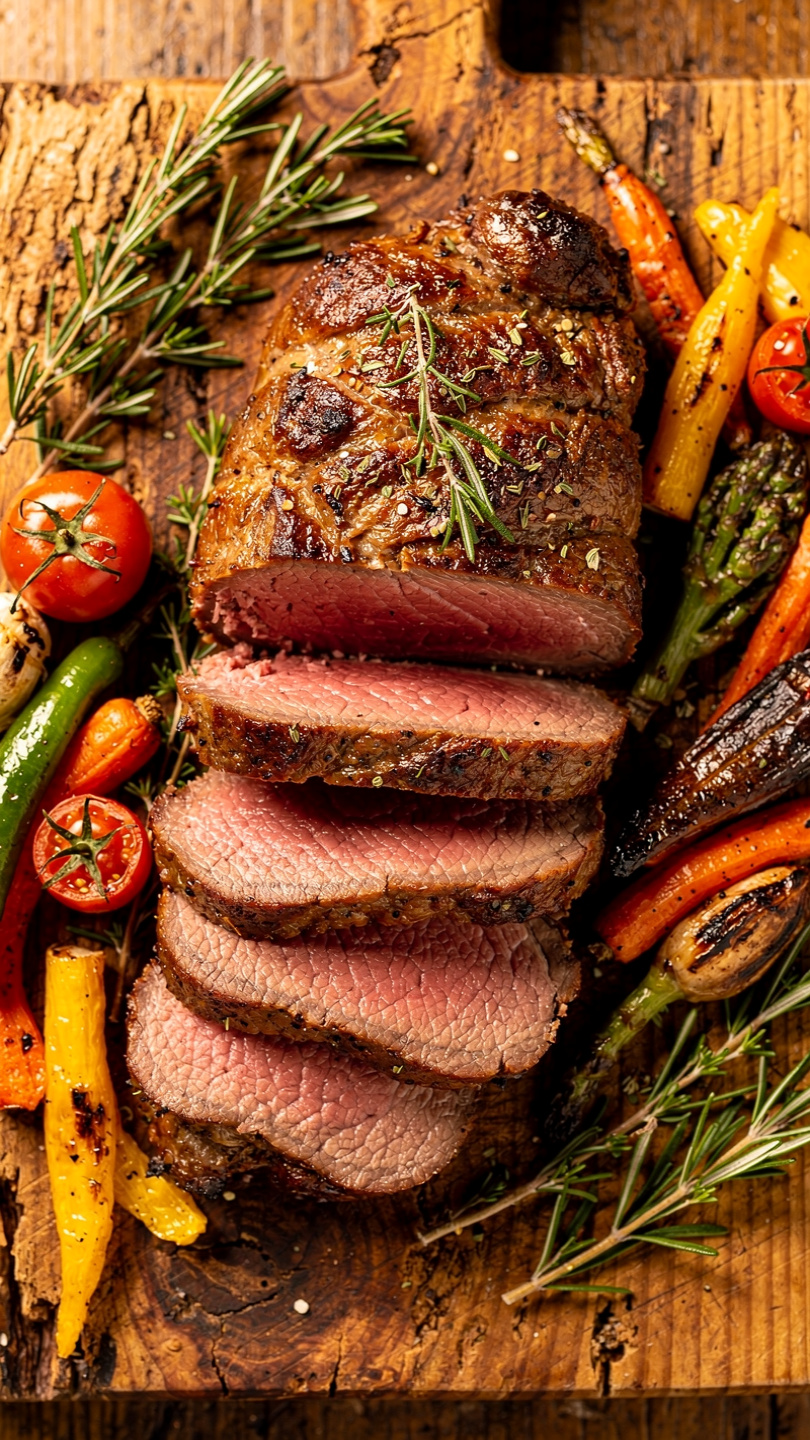
Million Dollar Roast Beef Tenderloin
This Million Dollar Roast Beef Tenderloin delivers a perfectly seared, herb-crusted centerpiece roast with a buttery, melt-in-your-mouth interior that rivals any steakhouse filet mignon roast.

The Roast That Earns Its Name
Some recipes are called "million dollar" as pure marketing. This one actually delivers. A properly roasted beef tenderloin, with a crackling herb-and-garlic crust on the outside and a blush-pink, buttery interior all the way through, is the kind of centerpiece that makes a table go quiet in the best possible way. Whether you are hosting the holidays, celebrating an anniversary, or simply deciding that a Tuesday deserves something spectacular, this prime tenderloin roast is the answer.
Beef tenderloin is the most naturally tender cut on the animal, the same muscle that gives us filet mignon. A whole filet mignon tenderloin roast is just that same cut left intact and cooked as one magnificent piece. The goal here is simple: develop a deeply savory, herb-scented crust through a hot sear, then finish the roast gently in the oven just until the center reaches that ideal medium-rare blush. Resting is non-negotiable. The result is a roasted beef tenderloin recipe that genuinely rivals anything you would order at a fine steakhouse.
Getting this right comes down to two things: quality ingredients and the right tools. A reliable instant-read thermometer is the single most important piece of equipment for any oven baked beef tenderloin recipe, and a heavy cast-iron skillet gives you the searing power to build a crust that a regular pan simply cannot match.
Why This Recipe Works
There are dozens of roasted beef tenderloin recipes out there, so let's talk about what makes this one different.
The dry exterior is everything. Patting the meat completely dry before seasoning is non-negotiable. Moisture is the enemy of a crust. If the surface is wet, you steam the meat instead of searing it, and you lose that mahogany, caramelized exterior that makes this worth making.
The compound butter does double duty. The herb butter, made with minced garlic, fresh rosemary, fresh thyme, Dijon mustard, and a splash of Worcestershire sauce, goes on in two stages. Half of it gets rubbed on before the sear to help the seasoning adhere. The rest coats the roast going into the oven, basting it from the outside in as it roasts.
The beef tenderloin seasoning recipe is simple on purpose. This cut does not need to be buried in complexity. Salt, pepper, garlic powder, and smoked paprika create a crust that complements rather than competes with the beef itself.
Chef's Tip: If you have time, salt the tenderloin uncovered in the refrigerator overnight before cooking. This dry-brine draws moisture out and then pulls it back into the meat, resulting in a more concentrated beefy flavor and an even drier surface for searing.
Choosing Your Tenderloin
For a roast that serves 6 comfortably, look for a center-cut beef tenderloin between 2.5 and 3.5 pounds. The center cut is the most uniform section, which matters because uneven thickness means uneven cooking. The tapered "tail" end of a whole tenderloin cooks faster than the center, so if your butcher gives you the whole piece, fold the tail under and tie it with kitchen twine to create a more even cylinder.
Ask your butcher to trim the silver skin and excess exterior fat for you. Silver skin does not break down during cooking and can make slices chewy. Most good butchers will do this without being asked if you specify that you want it roast-ready.
A Note on Doneness
For a filet mignon roast, medium-rare is the sweet spot. Pull the roast at 125 degrees F on an instant-read thermometer. Carryover cooking during the rest will bring it to about 130 degrees F, which is rosy, juicy, and exactly right. If you prefer medium, pull at 135 degrees F. Above 145 degrees F, tenderloin begins to lose what makes it special.
The Sear: Do Not Skip It
The sear is what separates a good oven baked beef tenderloin from a truly great one. Get your cast-iron screaming hot before the meat touches it. You want a deep, audible sizzle the moment it hits the pan. Turn the roast every 2 to 3 minutes, building a crust on all four sides before it ever sees the oven.
The whole sear should take about 8 to 10 minutes. It will smoke. That is a good sign.
Chef's Tip: Do not crowd the pan or fidget with the meat. Let each side sit undisturbed until it releases naturally from the surface. If it sticks, it is not ready to turn.
Ready to make this showstopper? Here is the complete, step-by-step recipe with every detail you need:
Million Dollar Roast Beef Tenderloin
This Million Dollar Roast Beef Tenderloin delivers a perfectly seared, herb-crusted centerpiece roast with a buttery, melt-in-your-mouth interior that rivals any steakhouse filet mignon roast.
Ingredients
- 3 lb beef tenderloin roast, center-cut, trimmed of silver skin and excess fat
- 2 tsp kosher salt, plus more to taste
- 1 1/2 tsp black pepper, freshly cracked
- 1 tsp garlic powder
- 1/2 tsp smoked paprika
- 2 tbsp fresh rosemary, finely chopped
- 1 tbsp fresh thyme leaves, stripped from stems
- 4 garlic cloves, minced
- 4 tbsp unsalted butter, softened, divided
- 2 tbsp olive oil, for searing
- 1 tbsp Dijon mustard, adds depth and helps the crust adhere
- 1 tsp Worcestershire sauce
- 1/2 tsp flaky sea salt, for finishing
Instruction
Remove the beef tenderloin from the refrigerator at least 45 minutes before cooking to bring it to room temperature. Pat it completely dry with paper towels on all sides.
Preheat your oven to 425 degrees F (220 degrees C). Line a rimmed baking sheet or roasting pan with a wire rack.
In a small bowl, combine the kosher salt, black pepper, garlic powder, and smoked paprika to create your beef tenderloin seasoning. In a separate bowl, mix the softened butter with the minced garlic, rosemary, thyme, Dijon mustard, and Worcestershire sauce until well blended.
Brush or rub the entire surface of the tenderloin with 2 tablespoons of the herb butter mixture. Then press the dry seasoning blend all over the meat, coating it evenly.
Heat the olive oil in a large oven-safe skillet or cast-iron pan over high heat until shimmering. Sear the tenderloin for 2 to 3 minutes per side, turning to brown all four sides, about 8 to 10 minutes total. This crust is what makes this a million dollar roast.
Transfer the seared tenderloin to the prepared wire rack on the baking sheet. Spread the remaining herb butter over the top and sides of the roast.
Roast in the preheated oven until an instant-read thermometer inserted into the thickest part reads 125 degrees F (52 degrees C) for medium-rare, about 20 to 25 minutes. For medium, pull at 135 degrees F (57 degrees C).
Remove the roast from the oven and tent loosely with aluminum foil. Let it rest for at least 10 to 15 minutes before slicing. The internal temperature will rise another 5 degrees during resting.
Slice into 1-inch medallions, finish with flaky sea salt, and serve immediately.
Equipment
- Large cast-iron skillet or heavy oven-safe pan
- Rimmed baking sheet with wire rack
- Instant-read meat thermometer
- Sharp carving knife
- Aluminum foil
- Small mixing bowls
- Kitchen twine (optional, for trussing)
Notes
Serving, Pairing, and Storing
Slice the rested roast into 1-inch medallions and finish each with a pinch of flaky sea salt. The presentation practically plates itself.
What to serve alongside:
- Creamy horseradish sauce or a red wine pan reduction
- Roasted garlic mashed potatoes or duchess potatoes
- Roasted asparagus, haricots verts, or a crisp winter salad
- A bold red wine, Cabernet Sauvignon, Malbec, or a good Bordeaux
Leftovers: Store slices in an airtight container for up to 3 days. Reheat gently in a 250 degree F oven until just warmed through. Cold leftovers are exceptional thinly sliced on crusty bread with horseradish cream and arugula.
This is the roast that earns the name. Once you make it, you will understand why a perfectly cooked beef tenderloin roast never, ever needs to be fussy to feel like a million dollars.