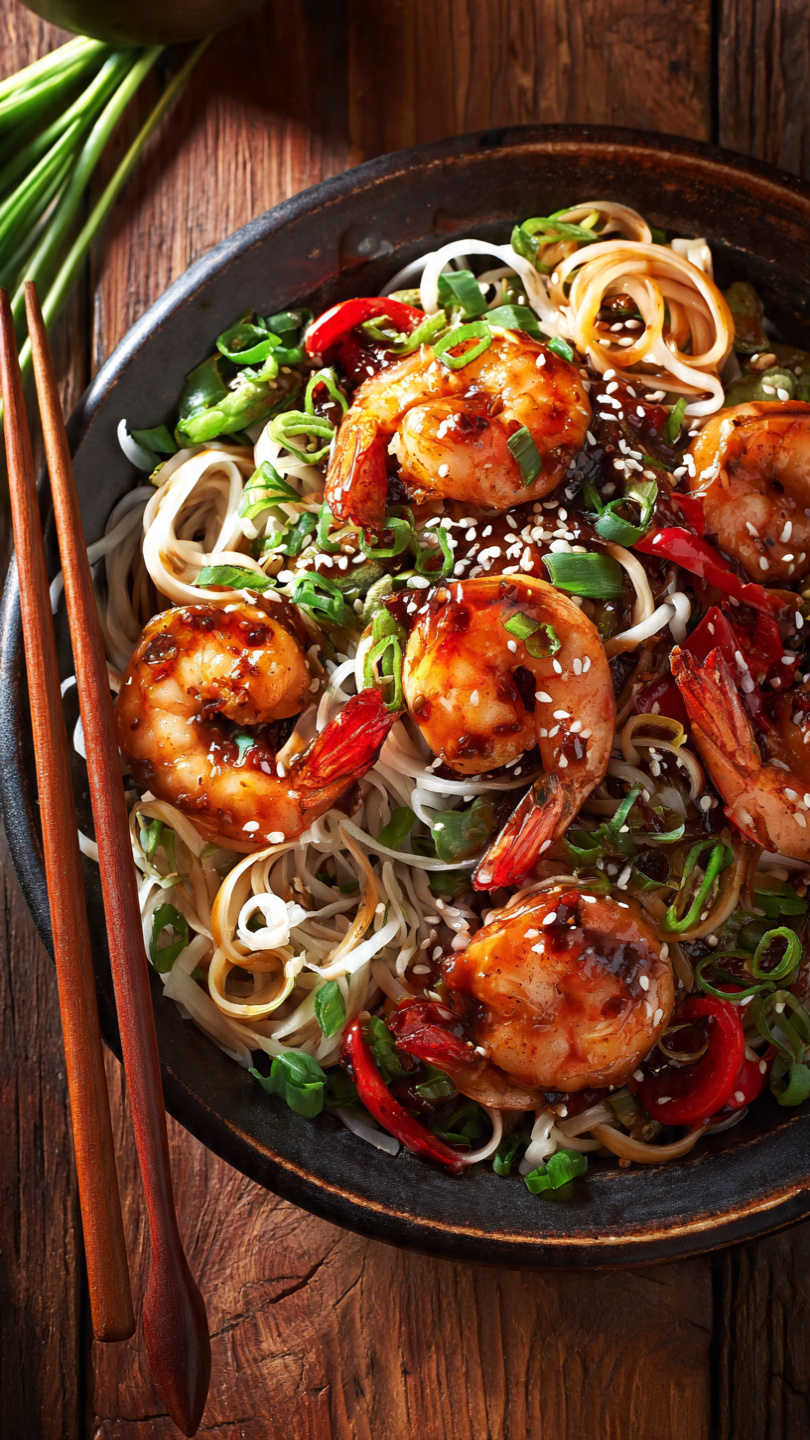
Shrimp Stir Fry with Rice Noodles
This easy shrimp stir fry with rice noodles comes together in under 30 minutes with a savory, garlicky sauce and crisp vegetables. A naturally gluten-free rice noodle dish the whole family will love.

The Weeknight Stir Fry That Tastes Like Takeout (But Better)
If you have ever stared into your fridge at 6pm wondering how to pull off something impressive without a lot of effort, this shrimp stir fry with rice noodles is your answer. It is fast, it is deeply savory, it is loaded with crisp vegetables and plump shrimp, and it comes together in under 30 minutes start to finish. Best of all, it is a naturally gluten-free rice noodle dish, which means everyone at the table can eat it without a second thought.
This recipe is inspired by the easy rice noodle stir fry dishes you find all across Southeast Asia, where thin or medium-width rice noodles soak up sauces like a dream. The combination of tamari, oyster sauce, sesame oil, and a touch of honey creates a glossy, balanced sauce that coats every strand. The shrimp stay juicy. The vegetables stay crisp. And the whole thing hits the table faster than delivery ever could.
Why Rice Noodles Are the Secret Weapon Here
Not all noodles are created equal when it comes to stir fry. Rice noodles have a silky, slightly chewy texture that holds up beautifully in a hot wok without turning to mush. They are one of the best gluten-free noodle stir fry options out there because they absorb flavor rather than just carrying it. Look for medium-width dried rice noodles, sometimes labeled "rice stick noodles," in the Asian foods aisle or at any Asian grocery store.
The key is to soak, not boil them before they hit the wok. A 10 to 12 minute soak in warm water gets them pliable and ready to finish cooking in the sauce, which means they soak up all that flavor right in the pan.
Chef's Tip: Do not over-soak your noodles. You want them bendy but still a little firm when they go into the wok. They will finish cooking with the sauce and come out perfectly tender.
Building the Sauce: Simple, Balanced, and Incredibly Savory
The sauce is what turns a good gluten-free rice noodle recipe into a great one. This one is a straightforward mix of pantry staples:
- Tamari for that deep, savory umami base without the gluten
- Oyster sauce for a touch of richness and depth (look for a gluten-free certified version)
- Rice vinegar to brighten everything up
- Honey for just a whisper of sweetness to balance the salt
- Sesame oil for that signature nutty aroma
- A cornstarch slurry so the sauce clings to the noodles and shrimp instead of pooling at the bottom
Mix it all together in a small bowl before you start cooking. In stir fry, everything moves fast, and having your sauce ready to pour is the difference between a smooth, confident cook and a frantic one.
Using quality ingredients and the right equipment makes a real difference in this kind of high-heat cooking. A good wok or heavy skillet and a reliable brand of tamari will take your stir fry from good to outstanding.
Getting the Shrimp Just Right
Overcooked shrimp is rubbery, and nobody wants that. The trick is high heat, dry shrimp, and short cook time. Pat your shrimp dry with paper towels before they ever touch the pan. Moisture is the enemy of a good sear. A dry shrimp in a screaming-hot wok will turn golden and pink in under two minutes total.
Cook the shrimp first, pull them out of the wok, and add them back at the very end just to warm through. That way they are perfectly cooked instead of overdone from sitting in a sauce-filled pan.
Chef's Tip: One of the most common stir fry mistakes is crowding the pan. If your shrimp are piled on top of each other, they will steam instead of sear. Cook in a single layer, and do not touch them for at least a minute.
What Vegetables Work Best
This Asian rice noodle stir fry is endlessly flexible when it comes to vegetables. The recipe calls for red bell pepper, snap peas, and shredded carrots because they cook quickly and add great color and crunch. But you can swap in whatever you have on hand:
- Broccoli florets cut small
- Baby bok choy halved lengthwise
- Mushrooms sliced thin
- Zucchini cut into half-moons
- Corn cut fresh from the cob
The rule of thumb is to cut everything thinly and uniformly so it all cooks at the same rate. Dense vegetables like broccoli may need an extra minute in the wok before the noodles go in.
Ready to make it? Here is the full step-by-step recipe:
Shrimp Stir Fry with Rice Noodles
This easy shrimp stir fry with rice noodles comes together in under 30 minutes with a savory, garlicky sauce and crisp vegetables. A naturally gluten-free rice noodle dish the whole family will love.
Ingredients
- 1 lb large shrimp, peeled and deveined, fresh or thawed from frozen, tails on or off
- 8 oz rice noodles, medium-width, soaked in warm water until pliable
- 2 tbsp sesame oil, divided
- 1 tbsp vegetable oil
- 4 garlic cloves, minced
- 1 tbsp fresh ginger, peeled and grated
- 1 red bell pepper, thinly sliced
- 1 cup snap peas, trimmed
- 1/2 cup shredded carrots
- 3 green onions, sliced, whites and greens separated
- 3 tbsp gluten-free tamari or soy sauce, use tamari to keep it gluten-free
- 2 tbsp oyster sauce, use gluten-free oyster sauce if needed
- 1 tbsp rice vinegar
- 1 tsp honey
- 1 tsp cornstarch, mixed with 1 tbsp cold water to make a slurry
- 1/4 tsp crushed red pepper flakes, optional, for heat
- 1 tbsp fresh lime juice, squeezed at the end
- 1 tbsp sesame seeds, for garnish
- 1/4 cup fresh cilantro, roughly chopped, for garnish
Instruction
Soak the rice noodles in a large bowl of warm water for 10 to 12 minutes, until pliable but not fully soft. Drain and set aside. They will finish cooking in the wok.
In a small bowl, whisk together the tamari, oyster sauce, rice vinegar, honey, 1 tablespoon of sesame oil, and the cornstarch slurry. Set the sauce aside.
Pat the shrimp dry with paper towels and season lightly with salt and the red pepper flakes if using. Dry shrimp sear much better than wet shrimp.
Heat a large wok or heavy skillet over high heat until it just begins to smoke. Add the vegetable oil and swirl to coat.
Add the shrimp in a single layer and cook undisturbed for 1 minute, then flip and cook another 30 to 60 seconds until pink and just opaque. Do not overcook. Remove to a plate.
Add the remaining 1 tablespoon of sesame oil to the wok. Add the garlic, ginger, and green onion whites and stir fry for 30 seconds until fragrant.
Add the red bell pepper, snap peas, and carrots. Stir fry over high heat for 2 to 3 minutes, keeping the vegetables moving so they stay crisp-tender.
Add the drained rice noodles to the wok. Pour the sauce over everything and toss well with tongs to coat. Stir fry for 1 to 2 minutes until the noodles are cooked through and the sauce has thickened slightly.
Return the cooked shrimp to the wok and toss everything together for 30 seconds, just to reheat.
Remove from heat and drizzle with fresh lime juice. Taste and adjust seasoning. Serve immediately topped with green onion greens, sesame seeds, and fresh cilantro.
Equipment
- Large wok or 12-inch heavy skillet
- Tongs
- Large mixing bowl (for soaking noodles)
- Small bowl (for sauce)
- Fine mesh strainer or colander
- Sharp chef's knife and cutting board
Notes
Serving, Storing, and Making It Your Own
This stir fry rice noodle recipe is best served immediately, straight from the wok, topped with a generous handful of fresh cilantro, sliced green onions, a sprinkle of sesame seeds, and a squeeze of fresh lime. The lime is not optional in our house. It lifts everything and makes the flavors pop.
Leftovers keep well in the fridge for up to 3 days. Reheat in a hot skillet with a splash of water or broth to loosen the noodles back up. The texture is not quite the same as fresh, but the flavor is just as good.
For a spicier version, add a drizzle of chili garlic sauce or a teaspoon of sambal oelek to the sauce. For a heartier meal, double the shrimp or add a couple of soft-boiled eggs on top. However you serve it, this easy rice noodle stir fry is the kind of recipe that earns a permanent spot in your weekly rotation.